
With 20 years of experience
Fire System Installation
Getting the right fire protection system installed correctly from the start is the foundation of everything that follows. Whether you are fitting out a new building, addressing the findings of a fire report, or replacing a system that has reached the end of its life, the installation has to be right. We design, supply, and install fire safety systems sized and specified to suit the building, the risk, and how the space is actually used.
Do you need work done on your fire alarm system? - Read on. . .
Give Us a Call When Ready
01296 393 292
If you are here, you probably need installation work done. You are at the research stage, trying to work out what that work actually involves, who to trust with it, and how to keep the process straightforward and the budget under control. The first question to answer is a simple one: what kind of work needs doing?
Installation covers a wide range. At one end, adding a single detector to an existing system. At the other, decommissioning a site entirely, stripping out the old panel, cabling, and devices, and starting again from scratch. Knowing something needs doing is not the same as knowing the full extent of what bringing it up to standard will involve. That is what this page is here to help with.
Most situations fall into one of three categories. A new build, where the fire system is designed and installed from the ground up. An existing building where the system needs attention, whether minor or more substantial. Or a building where the system is beyond repair or no longer compliant, and replacement is the only viable route. Look through the table below and see which one fits your situation.
- The system is in place but has gaps or faults
- A recent fire report has flagged deficiencies
- Coverage is missing in areas added or altered since original install
- Work scoped and quoted following a site survey
- Detectors are being added to an existing loop
- The system needs bringing up to BS 5839-1 compliance
- New zones are needed following a building extension or refurbishment
- The system is old, non-compliant, or beyond economic repair
- A fire risk assessment has recommended replacement
- Wiring, cabling, or detector types no longer meet current standards
- The panel is obsolete and parts are no longer available
- A new panel, new loops, and new devices are required throughout
- Full redesign and installation to BS 5839-1 from the ground up
- Work scoped and quoted following a site survey
- No existing system to work around; the design starts from a blank canvas
- System specified at design stage, coordinated with architect and M&E drawings
- Detector types, zones, and panel location agreed before first fix
- Cabling installed during first fix, devices and panel fitted at second fix
- System designed and installed to BS 5839-1 from the outset
- Where the project is CDM-notifiable, we operate within the construction programme under CDM 2015
- Full commissioning carried out once the building is at practical completion
- All certification, as-fitted drawings, and handover documentation provided on completion
Construction Projects and CDM Work
If you are a main contractor or project manager with an active build, the installation of fire detection and life safety systems is a regulated element of the construction programme. Under CDM 2015 specific duties apply to how these systems are designed, installed, tested, and handed over.
We work as a specialist subcontractor on CDM-notifiable projects, attending site for the duration of the relevant phase, carrying out installation and testing in line with the programme, and commissioning the system fully before handover. Several of our major project clients have retained us as their ongoing servicing and maintenance contractor once the build is complete. In many cases we installed the fire systems from the ground up and continue to hold the maintenance contract with the current owners. It is a relationship that suits clients who want continuity and a contractor who already knows the building inside out.
Specialist Suppression and Ancillary Systems
Some fire safety installations fall outside the scope of detection and alarm work but are closely connected to it, and on larger projects we are often involved in bringing these elements together.
Fixed suppression systems for higher-risk areas such as plant rooms, commercial kitchens, and server rooms require specialist design and commissioning. We carry out the enabling works, bringing power and cabling to the location and coordinating with the suppression specialist, who carries out the fitting and commissioning of the system itself.
Similarly, fire doors and AOV ventilation systems are part of the building fabric and fall under the main contractor's scope, but fire door release mechanisms and electromagnetic hold-open devices connect directly to the fire alarm system as part of the wider fire systems programme that falls to us, so we install and wire the door release hardware and integrate it with the panel, so that in an alarm condition doors close or release automatically as required under BS 5839-1.
If your project includes suppression, door release, or other ancillary fire systems, tell us at the survey stage and we will confirm our scope and where a specialist needs to be brought in.
Smaller Works
Not every job is a major installation. We handle the smaller end too. We work on projects of every size, from a single detector in a small office to full system installations across multi-site portfolios and CDM-regulated construction sites. As a family business with national coverage, the standard of work is the same regardless of the size of the contract. We approach every job the same way.
- Battery replacement programmes across a detector estate, with full system test on completion
- Familiarisation for building managers and security teams, so staff can recognise and clear faults on the panel without waiting for an engineer on a call out
- Addition or replacement of fire extinguishers, correctly typed and positioned for the space in accordance with BS 5306-3:2017 and current risk assessment guidance
- Wireless options are available where structural constraints make wiring impractical
- Fire safety signage throughout the building, from escape route signs to extinguisher identification, designed to be clear and unobtrusive
How We Work
Every job, regardless of size, follows the same process.
Survey: We visit the site and assess what it actually needs. We look at the building, how it is used, where the risks sit.
Design: We specify the right system or the right scope of works for that building.
Commission and Handover: The system is fully tested and all documentation, certificates, and as-fitted drawings are provided at handover.
Regulations We Work To
Fire installation work in the UK is governed by a framework of British Standards and legislation. These are not optional. They define how systems must be designed, installed, and tested, and they are what a fire risk assessor or enforcing authority will refer to if a system is ever called into question. Our engineers are trained and certificated to work within these frameworks.
BS 5839-1: The principal standard for fire detection and alarm systems in non-domestic buildings. Covers system design, installation, commissioning, and maintenance.
BS 5266-1: Governs emergency lighting. Sets out requirements for escape route illumination in commercial and public buildings.
BS 5306-3: The standard for portable fire extinguishers, covering types, performance, and placement requirements. Portable extinguishers remain the first line of defence in most buildings,
The Regulatory Reform (Fire Safety) Order 2005: The primary legislation governing fire safety in non-domestic premises in England and Wales. Places a legal duty on the responsible person to ensure adequate fire precautions are in place.
The Construction (Design and Management) Regulations 2015: Applies to construction projects above the notification threshold. Sets out duties for the design and installation of building services including fire systems.
Get in Touch
If you are planning a new installation, dealing with the findings of a fire report, or just trying to work out what a building actually needs, get in touch and we will talk it through. There is no obligation. Just a straightforward conversation of what the next step for you should be.
Start today
Trusted, reliable and professional fire alarm installers
Ready to talk through your project?
Project Proven Experience
We have been installing fire systems across commercial, residential, and construction projects for many years, working with building owners, facilities teams, and main contractors on everything from minor remedial works to full system installations in some of the most recognised buildings in the country. Every project starts with a honest conversation about what the building needs, and every installation is certificated to British Standard before we leave site.
20
Years Experience
50+
Projects
100+
Clients
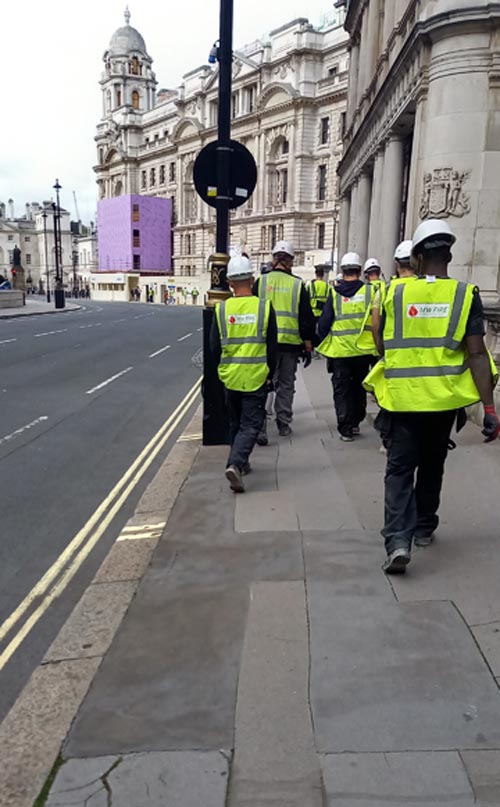
Why clients trust us with their installation

Every installation certificated to British Standard on completion
Same standard from single detector to full CDM project
Professional Workers